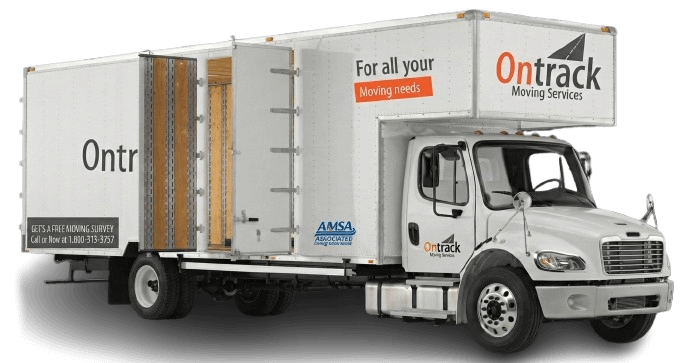
Move the Operation Without Losing the Order of the Inventory
A Bay Area company was relocating its office and a working parts warehouse from the South Bay to the East Bay, and the priority was clear: keep the operation running and keep hundreds of numbered parts in their existing order through the move. This is an anonymized account of how Ontrack Moving planned and ran it.
In short: this was a combined office and warehouse relocation where keeping the inventory in sequence mattered as much as moving it. The warehouse held hundreds of numbered parts across several stocked areas, and they had to land at the new building in the same order they left the old one. The crew moved them on machine carts, library carts, panel carts, and speed-packs, kept each section's items grouped at the shelf level, and offered the company the option to move the inventory on its own equipment rather than boxing everything. The work was phased across multiple days to support business continuity during the transition.
Running it this way kept the parts in order and was intended to reduce packing and unpacking work. For projects like this, see our Bay Area commercial movers and office relocation playbook.
TL;DR (30-Second Summary)
- The job: a combined office and warehouse relocation, roughly 16,000 square feet, from the South Bay to the East Bay, ground floor to ground floor.
- The priority: keep the operation running and keep the warehouse inventory in its existing numbered order.
- Inventory integrity: hundreds of parts moved on machine carts, library carts, panel carts, and speed-packs, kept grouped by section at the shelf level.
- The planning option we offered: move the warehouse inventory organized on its own equipment instead of boxing everything, to keep parts in order and reduce the need to repack them.
- Loaded for order, not for volume: trucks were loaded to preserve the sequence rather than stacked to maximum capacity.
- Lean office side: most desks and all cubicles stayed in place, so the office move was limited to specific items, including a large plan table that needed disassembly.
- Phased schedule: office preparation first, then the office relocation, then the warehouse in stages over several days, to keep disruption to the business low.
- Protection and coverage: $10,000,000 in combined business insurance policies, subject to policy terms, and standard $0.60 per pound per article cargo liability under the applicable signed moving agreement.
The Challenge: A Working Operation and a Warehouse of Numbered Parts
The company was relocating from one ground-floor facility in the South Bay to another in the East Bay. The office side was straightforward enough, but the warehouse was not. It held hundreds of parts stored across several distinct areas, an inventory cage, a job cage, a service area, a spare-parts room, and a consumables area, and every one of those parts had its place in a numbered system the business relied on day to day.
That is what made this more than a furniture move. If the parts arrived at the new building jumbled together, the operation would lose time digging through unsorted boxes to rebuild its own inventory, exactly when it needed to be back up and serving its departments. So the real challenge was not just moving the contents, it was moving them in a way that kept the numbered sequence intact and kept the business able to function while the move was underway.
The Solution: Move in Sequence, Not in a Pile of Boxes
Ontrack Moving planned the loading around the existing inventory sections. The client was offered an alternative to boxing all the parts: keeping suitable items organized on moving carts. The priority was set up front, keep the inventory grouped and in order, and the equipment and the truck loading were chosen to serve that priority rather than raw speed.
The core of the plan was to move much of the warehouse inventory on its own moving equipment instead of repacking it. The crew used machine carts, library carts, panel carts, and speed-packs to roll stocked items out in their existing groupings, keeping each section's numbered parts together at the shelf level. Because preserving that order was the point, the trucks were deliberately loaded to keep the sequence rather than stacked to maximum capacity. It is a trade the survey identified and the company agreed to: using truck space to preserve the inventory groupings for placement at the destination.
What the Project Covered
- A planning survey with the project manager to scope the office, the warehouse, the inventory areas, and the move sequence.
- An office preparation day to disassemble the large plan table and other items that needed breaking down, and to foam-protect and cart the monitors.
- The office relocation of the specific items in scope, with most desks and all cubicles left in place.
- The warehouse relocation phased across several days, with the inventory kept grouped and in sequence.
- Cart-based ordered transfer using machine carts, library carts, panel carts, and speed-packs, plus a pallet jack for palletized stock.
- The option to move inventory on its own equipment rather than boxing everything, scoped during the survey.
- Optional box and label delivery for the items the company did choose to pack, with unused cartons returnable for credit.
- Building protection and coordination at both ground-floor facilities.
The Survey: Planning the Sequence on the Ground
A move like this is planned on the floor, not on a spreadsheet. The owner and the project manager walked the operation to see how the inventory was laid out, how the areas connected, and what order the work needed to follow. Seeing the warehouse in person is what made the cart-based plan possible, because the groupings on the existing shelves are what the crew matched on the moving equipment.
The survey also drew the line between what was moving and what was staying. Most of the desks and all of the cubicles were staying put, so the office side narrowed down to a clear list: the monitors, the chairs, a handful of tables, some metal job boxes, and a large plan table that needed disassembly. Scoping it that way kept the labor pointed at the items that actually had to move instead of handling furniture that was not going anywhere.
Keeping the Warehouse Inventory in Order
The heart of the project was the warehouse, and the heart of the warehouse was order. The crew worked it in stages over several days. Palletized stock moved on a pallet jack. Everything else rolled onto machine carts, library carts, panel carts, and speed-packs, loaded so the numbered sections stayed grouped at the shelf level. The instruction on the floor was simple and strict: keep the section numbers together, and do not leave a box or a part behind. The trucks were loaded by section rather than to maximum capacity, preserving the inventory groupings for the receiving crew at the new building.
Why Moving Parts on Their Own Carts Beats Boxing Everything
Moving suitable parts on machine carts and speed-packs can reduce the need to pack and unpack individual cartons. On this project, the method kept numbered items in their existing groupings. The choice depends on the inventory, access and transport requirements, so it is scoped during the survey.
Phasing the Move to Keep the Business Running
Business continuity was a priority for this parts operation. The project was sequenced so the business could keep functioning through the move: the office preparation came first, then the office relocation, then the warehouse in stages across several days. Moving the warehouse by section, rather than emptying it all at once, was intended to limit disruption while the transition was underway. This is the same phased thinking laid out in our office relocation playbook and the protocol breakdown on the commercial moving hub.
The Office Side: Disassembly, Monitors, and a Lean List
Before the office items moved, the crew ran a preparation day to break down what needed breaking down. The large plan table and other items that called for disassembly were taken apart, and the monitors were protected in foam and loaded into machine carts rather than loose. Because most of the desks and all of the cubicles were staying, the office relocation itself was a focused list rather than a full tear-down, which kept it from competing with the warehouse work for crew and time.
Protection and Coverage on a Commercial Relocation
A combined office and warehouse move puts a crew in and around floors, doorways, loading areas, and racking at two facilities. Ontrack Moving carries $10,000,000 in combined business insurance policies, including premises liability. Coverage is subject to the applicable policy terms. Standard cargo liability is $0.60 per pound per article under the applicable signed moving agreement. Additional protection may be purchased through a third party, subject to its terms.
Businesses can review the insurance documents, moving agreement and carrier credentials when planning an equipment relocation. Ontrack Moving runs the work with its own in-house crews, not a subcontracted team booked through a broker.
| Coverage | What it applies to |
|---|---|
| $10M Combined Business Insurance | Combined business policies include premises liability and workers compensation. The policies have separate terms and limits; cargo liability is addressed by the moving agreement. |
| $0.60/lb cargo liability | The inventory, equipment, and items themselves, per article, under the applicable signed moving agreement. Additional protection may be purchased through a third party, subject to its terms. |
| DOT Inspection Record | The federal safety record under FMCSA inspection, verifiable under USDOT #2551548. |
The Outcome
The office and the warehouse were relocated from the South Bay to the East Bay, and the inventory landed at the new building in the order it left the old one. Moving the parts on their own equipment kept the numbered sections grouped, the phased schedule was designed around business continuity, and the lean office list kept the crew focused on the items that actually had to move. Loading for order preserved the numbered groupings for the receiving team.
It is the kind of project that shows what an asset-based carrier brings to a working operation, the ability to plan the move around how the business actually runs rather than just hauling boxes. If your organization is planning a warehouse relocation, an office move, or a combined project where keeping the inventory in order matters, our commercial moving team and storage services can scope it with an on-site walkthrough.