Commercial Case Study

Case Study: A Secure Office Decommissioning for a Defense Contractor

A two-floor office, the client's facility access protocol, full disassembly and disposal, warehouse storage, and a temporary relocation with leadership moved first. Here is how the project was run.

By Pablo Giordano, Owner, Ontrack Moving®  •  June 2026, updated September 2026  •  10 min read

Commercial Case Study

When the Access Rules Screen Out Most Movers

A U.S. Department of Defense contractor in the Bay Area needed to clear a two-floor office for a full renovation, under a security protocol that ruled out most of the moving companies they called. This is an anonymized account of how Ontrack Moving planned and ran that project, from the first phone call through disposal, storage, and a temporary relocation.

In short: the client required a crew of U.S. citizens, daily check-in, and a single badge that opened the designated doors, which were kept closed between passes. Several other companies could not field enough citizen-status crew to staff it. As an asset-based carrier that employs its own crews, Ontrack Moving could.

The work spanned full furniture disassembly, disposal of the majority of the contents, warehouse storage of the retained items, and a phased temporary relocation with leadership moved first. A color-label system sorted every item into one of three streams: disposal, storage, or the temporary office. For projects like this, see our Bay Area commercial movers and commercial storage pages.

TL;DR (30-Second Summary)

  • The constraint: the client's facility access protocol requiring a U.S.-citizen-only crew, daily check-in, and a single badge for the designated doors, which were kept closed between passes.
  • Why us: Ontrack employed its own crews and could staff the work to the client's access requirements.
  • The scope: on-site survey, full disassembly, disposal of the majority of contents, and storage of the retained items.
  • Color-coded by destination: a color-label system sorted every item into disposal, storage, or temporary office.
  • Phased schedule: two days for disposal, two days to break down the cubicle systems, and one day to move the retained items into storage.
  • Leadership first: the CEO and executives were moved as the priority by a dedicated team so critical functions came back online quickly.
  • Specialized equipment: a motorized stair-climbing dolly brought a heavy piece of machinery down two flights of stairs into storage.
  • Ten months in storage: the retained items stayed in Ontrack Moving vaults for about ten months, and when the renovation was delayed the crew pulled specific boxes back out on request.
  • Reassembled at the end: the heavy machinery was taken apart for the move out and reassembled in the finished building without a manual to work from.

The Challenge: A Security Standard That Screened Out Most Movers

The client opened the very first call with the part that mattered most to them. Their facility operated under a strict access protocol. Every worker who entered the building had to be a U.S. citizen, and the crew checked in each day. The facility issued a single badge to open the designated doors, and those doors were kept closed between passes, so the team coordinated that one badge to open and close on every pass in and out with loaded equipment. The crew coordinated entry and exit around that access procedure throughout the work.

They were calling Ontrack Moving because several other companies had not worked out. The recurring problem was staffing: those companies could not field enough citizen-status crew to complete a job of this size under the requirement. For a large two-floor decommissioning that runs across multiple days, a mover needs a full team that clears the access standard every single day, not just a name or two.

Why a Defense Contractor Chose an Asset-Based Carrier

This is exactly where the asset-based model matters. Ontrack Moving owns its trucks and employs its own crews under USDOT #2551548. The crews are direct employees, not a subcontracted team booked through a broker. Ontrack staffed the work to the client's citizenship and facility access requirements.

On this project, direct staffing helped Ontrack meet the client's access requirements. You can read more about how that distinction works on our carrier versus broker guide and what a certificate of insurance actually proves.

The Scope: Decommission, Disposal, Storage, and a Temporary Move

The project began the way every commercial job of this size should, with an on-site survey. Walking both floors first made it possible to map what would be retained, what would be cleared, what equipment the building would require, and the order the work needed to follow.

What the Project Covered

  • On-site survey of both floors to scope the retain, dispose, and sequence plan.
  • A color-label system sorting every item into one of three streams: disposal, storage, or the temporary office.
  • Full disassembly of cubicle systems and office furniture across both floors.
  • Disposal of the majority of the contents, with material routed to a recycling yard rather than landfill where possible.
  • Storage of the retained items in Ontrack Moving secured warehouse vaults, held through the renovation.
  • A second phase returning fifteen vaults from storage into the finished building, placed room by room under the same access protocol.
  • Retrieval of specific boxes from storage while the renovation was delayed, located through the vault inventory.
  • A temporary relocation of the working team to a nearby building so the business kept operating.
  • Leadership moved first, by a dedicated team so the most critical functions came back online quickly.

Before anything moved, the survey drove a simple organizing system. Every item was tagged with a color label marking its destination, so the crew always knew at a glance whether a piece was bound for disposal, for storage, or for the temporary office. On a job where three different end points ran in parallel, that color coding kept the streams from getting crossed.

Most of what the office held was being retired with the old build-out, so the larger share of the job was disassembly and disposal: breaking down cubicle systems into manageable components and clearing them out floor by floor. The portion the client chose to keep was disassembled, prepared, and inventoried into storage vaults at the Ontrack Moving warehouse, held there through the roughly ten-month renovation and returned to the finished building in a second phase described below.

Specialized Equipment for a Difficult Commercial Scenario

Among the items that had to come out was a heavy piece of machinery on the second floor, with no elevator path available for it. Muscling something that heavy down a staircase is how people and property get hurt, so the crew used the right tool for the scenario instead.

The Stair-Climbing Dolly

Ontrack Moving keeps specialized equipment on hand for exactly these situations. A motorized stair-climbing dolly let the crew walk the heavy machinery down two flights of stairs in a controlled, mechanically supported descent and load it straight into storage. Matching the equipment to the specific commercial scenario is part of planning the job, not something to improvise on move day.

Moving Leadership First

On an executive relocation, leadership and key functions get back to work first. The CEO and executives were moved as the priority into the temporary space by a dedicated team, with their items flagged for priority within the temporary-office stream. The aim was straightforward: get leadership set up and operational quickly in the temporary building so the most critical work continued while the rest of the office transitioned around it.

Phased-Shift Scheduling to Keep the Business Running

A renovation does not pause the business. The project was staged across multiple days and areas under a phased-shift approach, so one part of the office could be broken down and cleared while another part stayed in use, and the team moved into the temporary building in a planned sequence rather than all at once. The decommission itself ran across five working days: two days of disposal, two days breaking down the cubicle systems, and a final day to move the retained items into storage. This is the same phased thinking described in our office relocation playbook and the protocol breakdown on the commercial moving hub.

Phase Two: Bringing It All Back Out of Storage

A decommission is only half of a renovation project. The other half comes months later, when the building is ready and everything that was vaulted has to go back in and land in the right rooms. Ontrack Moving® returned this client's retained contents from warehouse storage to the renovated facility in a second phase, running it as two scopes that together brought back fifteen storage vaults, with two trucks assigned to each scope and crews of five and six working across two and three days.

The renovation ran longer than planned, and the retained contents stayed in storage for about ten months. During that stretch the client occasionally needed specific items back before the full return. On one occasion that meant ten particular boxes out of a much larger storage load. Because the retained items had been inventoried into their vaults when they went in, the crew could locate those boxes and pull them for the client, then leave the rest in place for the return.

The same access protocol governed the return. The citizenship requirement did not relax because the building had been renovated, so the crew was staffed to it again in advance: the people permitted inside handled placement, while the rest worked the trucks and the path to the door. The return plan accounted for those access requirements when assigning the work inside and outside the building.

Placement was the work. Returning contents is not a delivery to a loading area; it is putting specific items back into specific rooms across a building with no elevator. A heavy filing cabinet had to travel from the ground floor up to the IT office on the upper floor, which is a planned stair carry with the crew and equipment set for it in advance rather than a surprise discovered at the bottom of a staircase. The heavy machinery that had come down two flights on the motorized stair-climbing dolly went back into its position on the ground floor. That machinery had been taken apart for the move out, and the crew reassembled it in place without a manual to work from. Electronics came out of storage and back to the workstations they belonged to, along with the retained filing cabinets and roughly twenty boxes returned from the temporary office.

The scope also carried after-move support, which on a return project is not a courtesy line. It is the acknowledgment that a company standing its own office back up will find things it wants shifted once people are actually working in the space again, and that the mover who placed everything is the one who should come back and adjust it.

Why Vault Storage Suits a Return Project

Vault storage kept the retained contents grouped for the return to the renovated building. Planning the return alongside storage helped organize the later placement work. Vault counts are estimated at survey and confirmed by the actual volume loaded.

Protection on a Commercial Decommission

A decommissioning of this size touches elevators, floors, door frames, loading areas, and shared building space. Ontrack Moving carries a $10,000,000 Combined Protection Tower across separate business policies, each subject to its own terms and limits. Customer goods are addressed separately under the signed moving agreement, including the $0.60 per pound per article provision where elected. Additional valuation protection is available through a third-party provider, subject to its terms.

Coverage What it applies to
$10M Combined Protection Tower Combined limits across separate business policies, each subject to its own terms. This is not a single $10M premises policy or protection for the value of customer goods.
$0.60/lb cargo liability The $0.60 per pound per article provision for customer goods, where elected under the signed moving agreement. Additional valuation protection is available through a third-party provider, subject to its terms.
FMCSA Company Record The official FMCSA company snapshot, listed under USDOT #2551548.

The Outcome

The office was cleared for the renovation under the access protocol throughout, with a U.S.-citizen crew checking in daily and following the facility access procedure. The majority of the contents were disposed of and recycled where possible, the retained items went into Ontrack Moving® secured storage, and the working team was relocated to the temporary building with leadership prioritized so the most critical functions came back online quickly.

The renovation has since finished and the second phase is complete. Fifteen storage vaults came back out of the warehouse and into the finished building across two scopes, under the same citizenship protocol that governed the decommission, with placement handled room by room rather than dropped at a loading area. The project ran as one continuous piece of work with a long pause in the middle, which is what a renovation move actually is.

It is the kind of project that shows what an asset-based carrier is for: a job that several other companies could not staff, run by an in-house crew working to the facility access requirements with the equipment and phased plan for the job. If your organization is planning a renovation move, a secure-facility relocation, or an office decommissioning, our commercial moving team can scope it with an on-site survey.

Frequently Asked Questions

On this project, Ontrack assigned a crew that met the facility citizenship and access requirements. Those requirements are confirmed with the client before staffing a secure-facility move. The client had found that several other companies could not field enough citizen-status crew to staff this job, which is why the work came to Ontrack Moving.

Office decommissioning is the process of fully clearing a commercial space, typically before a renovation or at the end of a lease. It usually involves disassembling cubicle systems and furniture, sorting contents into items to retain, donate, recycle, or dispose of, removing everything from the floors, and preparing the space for the next phase. Retained items are often packed and placed into storage for return later.

The handling method depends on the item, the staircase, and the available route. On this project, the crew used a motorized stair-climbing dolly to bring heavy machinery down two flights of stairs. The survey informed the equipment and handling plan.

Phased scheduling can help a business keep some functions operating during a renovation move. On this project, the work was staged across multiple days and areas, and the working team moved to a nearby temporary space with leadership and priority functions moved first. The schedule depends on the space, access, and business needs.

Yes. On this project, retained furniture and equipment were inventoried and held in Ontrack Moving secured storage vaults, then returned to the renovated building. Storage and return services are set out in the agreed scope. Liability for stored goods is governed by the applicable storage agreement; additional valuation protection is available through a third-party provider, subject to its terms.

Ontrack Moving® scopes the return as its own phase rather than treating it as an afterthought to the move out. On this project the retained contents came back from warehouse storage into the finished building as fifteen storage vaults across two scopes, with two trucks assigned to each and crews of five and six working across two and three days. The difference between a return and an ordinary delivery is placement: contents have to go back into specific rooms across the building, including a stair carry to an upper floor where no elevator was available, rather than being staged at a loading area. The same facility access protocol that governed the decommission applied again on the return, and after-move support was carried in the scope for the adjustments a company finds once its people are working in the space again.

Ontrack Moving® did this on this project. The retained contents were inventoried into storage vaults, and when the renovation was delayed the client asked for specific items back before the full return, including ten particular boxes out of a much larger storage load. The vault inventory let the crew locate and pull those boxes while the rest stayed in storage for the return.
Disclosure: This is an anonymized account of a real project. Identifying details, including the client name, exact location, and dates, have been withheld. Ontrack Moving® is an asset-based carrier licensed under USDOT #2551548 and CA License CAL-T190721, with its federal carrier record available through FMCSA. The $10,000,000 Combined Protection Tower combines separate business policies, each subject to its own terms and limits. Customer goods are addressed under the signed moving agreement, including $0.60 per pound per article where elected. Storage terms are set out in the applicable storage agreement. Additional valuation protection is available through a third-party provider, subject to its terms. Final charges on any project are based on actual labor time, materials used, access conditions, scope changes, waiting time, and any additional services requested or required to complete the work.
KEEP READING

Related Reading

Commercial Case Study

Case Study: A San Francisco Office Move and Decommission for Aravo Solutions

A real commercial project, named with the client's permission. Ontrack Moving relocated Aravo Solutions from the 12th floor of 88 Kearny Street into a WeWork suite at 580 California Street, two downtown Class A towers both managed by JLL, and ran the move, the decommission, warehouse storage of a set of desks, and a shipment to Texas as one project. How it ran: certificates of insurance, waivers of subrogation, and indemnity agreements cleared at both buildings before move day; an after-hours and weekend window the buildings required; a preparation day to take down wall-mounted TVs and cabinets and break down the cubicles; office layout mapping and a labeling system; reusable E-crates; two SFMTA permits; the freight-elevator funnel that set the pace; responsible recycling; and e-waste handling with certificates of destruction for the hard drives.

9 min read Read
Commercial Case Study

Case Study: A Warehouse and Office Relocation That Kept the Inventory in Order

A real commercial project, anonymized. A Bay Area company with a working parts warehouse needed to relocate from the South Bay to the East Bay without losing the order of its inventory or shutting the operation down. How Ontrack Moving ran it: hundreds of numbered parts kept grouped and in sequence on machine carts, library carts, panel carts, and speed-packs; the option to move the inventory on its own equipment instead of boxing everything; trucks loaded for order rather than maximum volume; most desks and all cubicles left in place; and a phased schedule planned to limit disruption to the business.

9 min read Read
Laboratory Case Study

Case Study: A Contamination-Controlled Lab Move for Wild Type Foods in San Francisco

A real commercial project, named with the client's permission. Wild Type Foods, a San Francisco company that grows salmon from cells, moved its laboratory across Dogpatch into a new clean space under a decontamination protocol, over two days with a crew of thirteen and roughly 212 dolly loads. How Ontrack Moving ran it: an origin loading dock sitting on uneven ground, worked with a liftgate truck and a portable ramp so heavy equipment crossed level ground into the truck; seven biological safety cabinets moved upright, level, and braced; two autoclaves, two incubators, lab refrigeration, and twenty-five benchtop devices padded and crated; and a crew that gowned up in decontamination suits, shoe covers, hair covers, and safety glasses and stepped across a sole-decontamination mat to unload inside the controlled area. The client chose Ontrack regardless of price, for accountability. The $10M combined business insurance stack is separate from basic $0.60 per pound per article equipment liability under the applicable moving agreement.

8 min read Read
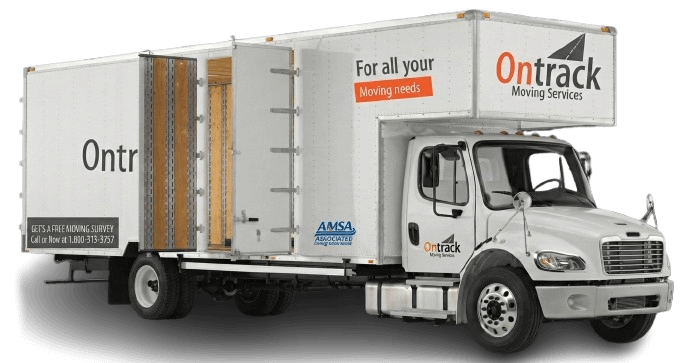
Ontrack Moving fully equipped truck for a Bay Area commercial office decommissioning

Planning an Office Move or Decommissioning?

Office relocations, decommissioning, and secure-facility moves across the Bay Area, run by our own in-house crews. Asset-based direct carrier under USDOT #2551548. $10M Combined Protection Tower across separate business policies.

Planning a Move? Get your free estimate.