Cost Transparency Report

The 2026 Moving Cost Transparency Report: Bay Area and Phoenix Edition

The factors that shape a California or Arizona moving quote, from inventory and access to packing and the written estimate terms.

An online price may be a preliminary planning figure rather than a written estimate for your move. Real pricing depends on factors a website cannot see from a zip code alone: your stairs, your parking situation, the weight of your load, the time of year, the access to your destination, and whether the mover has crews sitting idle or running at capacity. This report lays out the honest variables behind 2026 pricing in the San Francisco Bay Area and the Phoenix Metro.

Pro Tip from the Ontrack Moving® Office

The most accurate estimate comes from a video walkthrough or in-home survey, not a web form. Arrange a video walkthrough with an estimator. Walk through every room, every closet, the garage, and the storage shed. An estimator who has seen your inventory can identify the services and access conditions to include in a written estimate. A web form cannot see your piano, your staircase, or the permit zone in front of your building.

Why Is Moving Cost Transparency Such a Problem in 2026?

A moving broker arranges transportation with a carrier. When comparing a broker quote with a direct-carrier quote, identify the carrier that will perform the move and confirm the written estimate type and scope. A broker can provide a binding or nonbinding estimate based on the authorized carrier tariff and a written agreement. FMCSA explains the distinction.

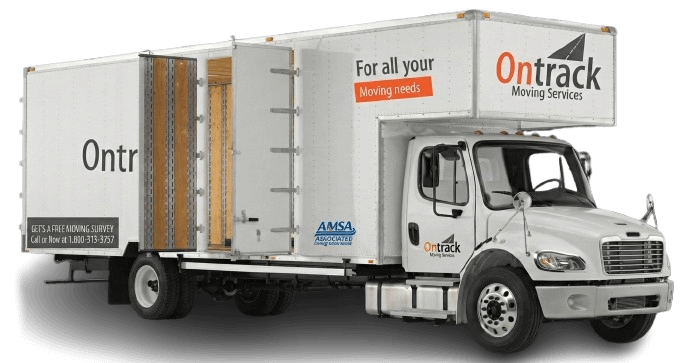
Ontrack Moving® is an asset-based carrier. We own the trucks (USDOT #2551548). We employ the crews. Your written estimate identifies the pricing basis, inventory and services. Review any changes to that scope before additional work begins.

Why Do Bay Area Moves Cost More Than Phoenix Moves?

Labor, travel and access can make a Bay Area move cost more, but there is no single percentage that applies to every job. Compare the same crew size, inventory and services. Relevant factors include:

  • Labor rates in Alameda, Santa Clara, and San Francisco counties reflect California wage floors and high cost-of-living multipliers for a professional moving crew.
  • Parking permits are often required for trucks in San Francisco, Berkeley, Oakland, and Palo Alto. Check the current city fee and whether reserved curb space is needed for the address.
  • Narrow Victorian staircases, walk-ups, and elevator reservation fees add real time to any urban Bay Area job.
  • Hill approaches and tight streets in neighborhoods like Noe Valley, Russian Hill, and the Berkeley Hills limit truck size, which raises crew hours per cubic foot.

How Does Phoenix Weather Affect Moving Prices?

Phoenix summer heat is a planning factor. Discuss loading windows, building access and heat-sensitive belongings before the quote is finalized:

  • Climate-aware materials: identify candles, sensitive electronics, art and wine before quoting; their transport needs depend on the item. Carry medication with you according to its storage instructions.
  • Discuss an earlier loading window where the building and route allow it.
  • Discuss loading and staging arrangements for California-Arizona moves; confirm any special temperature requirements separately.
  • Long driveways and gated community access in Peoria, Surprise, Scottsdale, and Gilbert add carry-distance fees that hourly rates alone do not capture.

What Are the Real Cost Factors: Bay Area vs Phoenix?

This is a side-by-side planning comparison of the two markets. These are factors that move the bill up or down, not flat rates. A quote needs the details that apply to your job.

Cost Factor San Francisco Bay Area Phoenix Metro Impact on Final Bill
Labor rates Higher wage floor (CA), denser urban routing Lower wage structure, flatter geography Compare the published rate for the same crew size
Fuel and truck time Stop-and-go traffic, bridge tolls, hill grades Open grid, fewer tolls, straight highways Confirm travel charges in the written estimate
Parking and permits Check city requirements for the specific curb space Rarely required outside downtown Phoenix Flat add-on line item when applicable
Building access Narrow staircases, elevator reservation fees, loading dock windows Long driveways, gated community check-ins, wider doorways Both markets add carry-distance time
Climate protection Standard pads, weather-safe blankets Item-specific heat precautions and agreed loading windows Handling requirements depend on the inventory
Seasonality Peak May to September (school calendar, tech relocations) Peak October to April (snowbird inflow, cooler months) Compare available dates and written quotes
Specialty items Pianos, fine art, Eichler radiant-floor protocol Gun safes, hot tubs, casita and guesthouse logistics Each specialty adds crew hours and specific equipment
Storage bridge Secure storage at Hayward facility Climate-controlled storage at Peoria facility Storage can bridge a gap between property dates

What Should You Check in an Instant Online Quote?

An honest in-home or video estimator asks detailed questions: How many stairs? Is the elevator reserved? How wide is the staircase? Is the driveway gated? Do you have a piano, gun safe, or wine cellar? How far is the truck from the front door on both ends?

A short online form may not capture those details. Before treating its price as a moving budget, check these points:

  1. Before booking: check whether the online number is a preliminary price or a written estimate.
  2. Carrier identity: confirm the authorized carrier and contact details before moving day.
  3. Scope changes: discuss added inventory, access changes and additional services before loading.
  4. Payment terms: read the estimate and delivery-payment terms before signing, and verify the carrier credentials.

How to Tell if You Are Talking to a Broker

Ask who will perform the transportation and request the carrier name and USDOT number. Verify that number on the FMCSA SAFER database. Check whether you are dealing with a broker, a carrier, or a business registered for both roles.

How Does Ontrack Moving® Produce a Binding Estimate?

Our estimators do not run an algorithm on your zip code. They run a process:

  1. Video or in-home walkthrough of every room.
  2. Inventory review to estimate load size and truck needs.
  3. Access survey: stairs, elevator, driveway length, parking zone, gate codes.
  4. Specialty review: pianos, art, safes, wine, lab equipment, corporate inventory.
  5. Route review: local, long-distance or interstate, including access and weather considerations.
  6. A written estimate identifying its pricing basis and included inventory and services.

Review the written estimate with Ontrack before booking. Its terms explain how the price applies to the listed scope and how changes are handled.

What Are the Biggest Surprise Costs Customers Run Into?

  • Long-carry fees when the truck cannot park close to the door. An estimator measures this ahead of time.
  • Stair and elevator fees for floor counts above the first. Disclosed in the estimate.
  • Packing materials for jobs that add pack-day service after initial estimate. Priced by box count, not guessed.
  • Storage-in-transit when the closing date on the new home shifts. We budget this up front.
  • Permit and COI fees for buildings that require certificates of insurance or parking permits.

None of these should be surprises. They are standard line items in an honest estimate. Ask which apply to your move and how they are priced.

What Protection Comes With Your Move, and What Does It Actually Cover?

Keep business insurance and liability for customer belongings separate when reviewing a quote:

  • Property and building protection: Ontrack carries $10,000,000 in combined business insurance policies, including building and premises liability, with separate limits and terms.
  • Customer belongings: Customer belongings are separate: basic $0.60 per pound per article liability applies under the signed moving agreement where that level is selected in writing. Additional protection may be purchased through a third-party provider, subject to its terms; Ontrack does not sell insurance or valuation. On local moves, final charges will be based on actual labor time, materials used, access conditions, scope changes, waiting time, and any additional services requested or required to complete the move. On long-distance and interstate moves, they will be based on the actual inventory and services at pickup, access conditions, scope changes, waiting time, and any additional services requested or required to complete the move. These belongings terms are separate from the combined business insurance policies.

Ask the carrier to explain the separate terms for business insurance and customer belongings. You should always ask for both numbers in writing before you sign.

What Should You Compare Before Booking a Move?

Experience helps identify questions to ask about a move; it does not establish a single price or outcome for every job. Planning considerations include:

  • For Bay Area to Phoenix relocations, compare both access arrangements and the actual inventory before budgeting.
  • For commercial and lab relocations, agree on the sequence of work and the responsibilities of the business, movers and any equipment specialists.
  • For Phoenix-area residential moves, confirm any HOA requirements and gate access at the actual address.
  • For California-Arizona interstate moves, identify heat-sensitive items and confirm suitable handling before transport.

The written estimate should reflect the inventory, route and services discussed for your move.

Commercial pricing carries its own cost variables (freight-elevator fees, after-hours surcharges, COI endorsement costs, Class-A building minimums) that do not show up on residential quotes. For city-specific commercial estimates with these line items broken out, see our Oakland commercial movers, Oakland office movers, San Jose commercial movers, Walnut Creek commercial movers, Fremont commercial movers, and Berkeley commercial movers pages.

Frequently Asked Questions

Crew size, inventory, travel and access determine the comparison. Some Bay Area crew rates are higher than Phoenix rates, while the two-mover starting rate is the same. Permits, elevator windows, long carries and hot-weather planning can change the total in either market.

Hot weather can affect loading times and the handling plan. Identify heat-sensitive items before quoting and agree on suitable transport with the estimator. Keep medication with you under its storage instructions; padding alone does not control temperature.

An instant online quote uses automated square-footage or item-count input and produces a best-guess price without reviewing what actually ships. An in-home or video survey sends a surveyor or recorded walkthrough to weigh the load, flag access obstacles, and price crew and truck time accurately. The written estimate must identify whether it is binding or nonbinding and the inventory and services it covers. A signature alone does not determine the estimate type.

A mover with multi-year job records can compare a new estimate against actual shipped weight from similar households by bedroom count, route, and pack scope. Averaging those weights against the new survey's room-by-room inventory tightens variance, so the binding or binding-not-to-exceed figure reflects what comparable loads actually weighed at the scale rather than a textbook pounds-per-cubic-foot guess.
Disclosure: Ontrack Moving® is an asset-based carrier licensed under USDOT #2551548 and CA License CAL-T190721, operating with an inspection record available through FMCSA. Ontrack carries $10,000,000 in combined business insurance policies, including building and premises liability, with separate limits and terms. Customer belongings are separate: basic $0.60 per pound per article liability applies under the signed moving agreement where that level is selected in writing. Additional protection may be purchased through a third-party provider, subject to its terms; Ontrack does not sell insurance or valuation. The factors in this report are planning guidance. Arrange an inventory survey and review the type, scope and terms of the written estimate before booking.
KEEP READING

Related Articles

Pricing

How Much Do Movers Cost? 2026 Rates from an Asset-Based Carrier

The rate card, published by the carrier that owns the trucks. Hourly rates by crew size for the Bay Area and Phoenix, cost by home size with the two columns nobody else prints (how many trucks your home needs, and the square footage where that changes), hour minimums, how drive time is billed in each market, and an honest account of why the numbers you found elsewhere are so much lower.

9 min read Read
Moving Day Etiquette

How Much Should You Tip Movers? An Owner’s Straight Answer (2026)

Tipping movers is optional, never required. The 2026 reference: $20 to $50 per mover on a smaller move, $50 to $100 per mover on a full day. Per mover, not percentage, so a $500 move lands at $40 to $100 total. Plus long-distance two-crew etiquette, cash vs the tablet tip screen, and why a named review outlasts the cash.

8 min read Read
Ontrack Moving fully equipped truck

Ready for an Honest Estimate?

Written estimate. Direct carrier. FMCSA Inspection Record. Tell us about your move.

Moving Soon? Get your free estimate.